From Paris to Brisbane: Building the Next Generation of Olympic Innovation
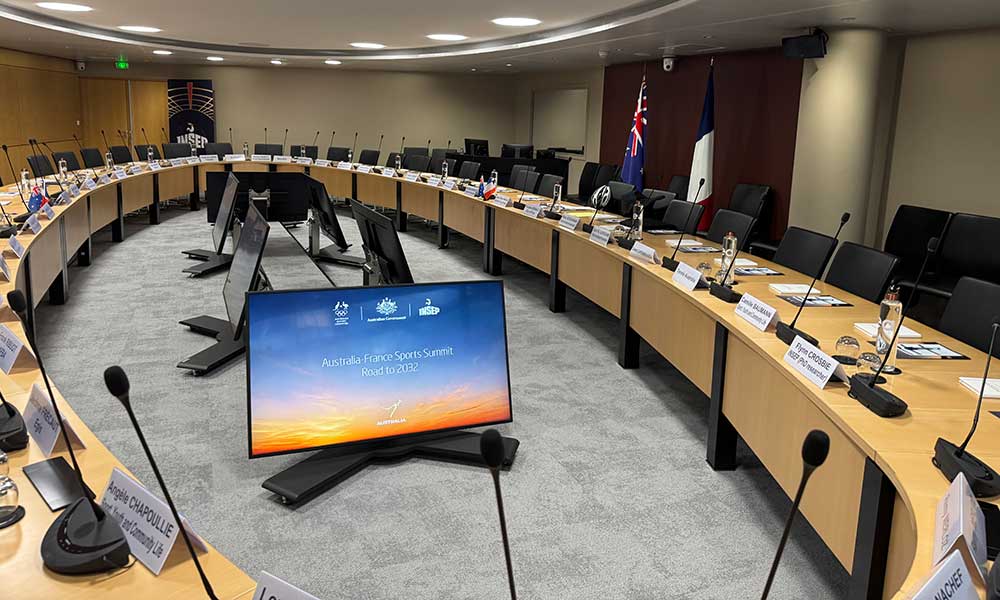
Positioned two years after Paris 2024 and six years ahead of Brisbane 2032, the summit established a deliberate knowledge transfer pipeline between host cities, focused on high-performance systems, technology and innovation, and major event delivery.
Diverging Olympic Futures
A central insight emerging from discussions is the divergence in Olympic delivery models. Paris 2024 and Brisbane 2032 share a state-led, legacy-driven approach, while Los Angeles 2028 represents a more market-led, privately financed model.
Paris successfully demonstrated how public investment, strong governance and sustainability mandates can deliver a controlled and responsible Games. Brisbane is adopting a hybrid model, combining public infrastructure investment with private sector engagement and long-term economic transformation. By contrast, LA 2028 is structured around commercial revenue and existing infrastructure, prioritising cost efficiency and scalability. This divergence frames broader questions for future host cities: Are the Games primarily vehicles for public good, or platforms for commercial growth? Is there a model for both?
Innovation: The Missing Legacy Link
Paris 2024 set new benchmarks in sustainability and delivery. However, French stakeholders reported of a key innovation lesson that emerged after the games concluded. Whilst Paris 2024 implemented many innovative solutions, it was indicated that sustaining innovation momentum beyond the Games remained a challenge. Despite extensive innovation activity during the event, including hackathons, partnerships and co-creation initiatives, these efforts were largely dissolved post-Games due to a lack of a continuity mechanism, absence of an institutional anchor and limited integration into long-term legacy planning.
This gap highlights a critical challenge as innovation is often treated as an event-specific function rather than a lasting ecosystem capability.
A Future Model: Externalised Innovation
To address this, a new model of externalised innovation is emerging. Based on feedback received at the summit, this approach advocates for:
- Starting innovation programs 5-6 years ahead of the Games
- Using an innovation intermediary to connect stakeholders
- Ensuring continuity before, during and after the event through an external entity.
Rather than burdening organising committees with experimentation, intermediaries can coordinate startups, corporates, and sport organisations, embedding innovation into the broader ecosystem. For Brisbane 2032, this represents a significant opportunity to "leapfrog" previous hosts by institutionalising innovation as part of legacy outcomes from the outset.
Technology as a Driver of Inclusion
Technology also plays a critical role in advancing integration between Olympic and Paralympic Games. When applied thoughtfully, it can enhance:
- Accessibility in venues and broadcasts
- Athlete performance and classification systems
- Inclusive fan engagement experiences
The key is ensuring technology addresses real-world challenges rather than being implemented for its own sake.
A Platform for Collaboration
The summit reinforced the importance of international collaboration, particularly between Australia and France. Opportunities range from joint innovation challenges aligned to Olympic problem statements, trade delegations to strengthen sportstech ecosystems and shared platforms for startups and investment. As such, establishing reciprocal "landing pads" for sportstech businesses could further accelerate global collaboration.
Looking Ahead to 2032
With 6 years to go, time is a unique advantage for Brisbane 2032. By learning from Paris and observing the commercial model of LA, it can define a new blueprint to integrate public value, private sector innovation, and long-term legacy. The next generation of Olympic and Paralympic Games will not be judged solely on delivery, but on enduring impact and changes the event delivers to the host. The challenge as well as the opportunity for Brisbane is to ensure that innovation is not just part of the Games, but part of what remains long after they are over.